The human factor, the first line of defense in cybersecurity

It may seem that a cyberattack begins with a sophisticated hack, but the reality is that one of the most commonly used vectors remains the same: the human factor, through oversights, haste, or incorrect validations.
These risks highlight the importance of adopting advanced fraud prevention strategies to effectively mitigate both internal and external threats.
A very clear example of this was the case of MGM Resorts in 2023. In this incident, the attackers did not need to exploit a complex vulnerability to gain entry: they obtained access through social engineering, impersonating an employee and contacting the support service to recover credentials.
Below is a simplified timeline of the incident:
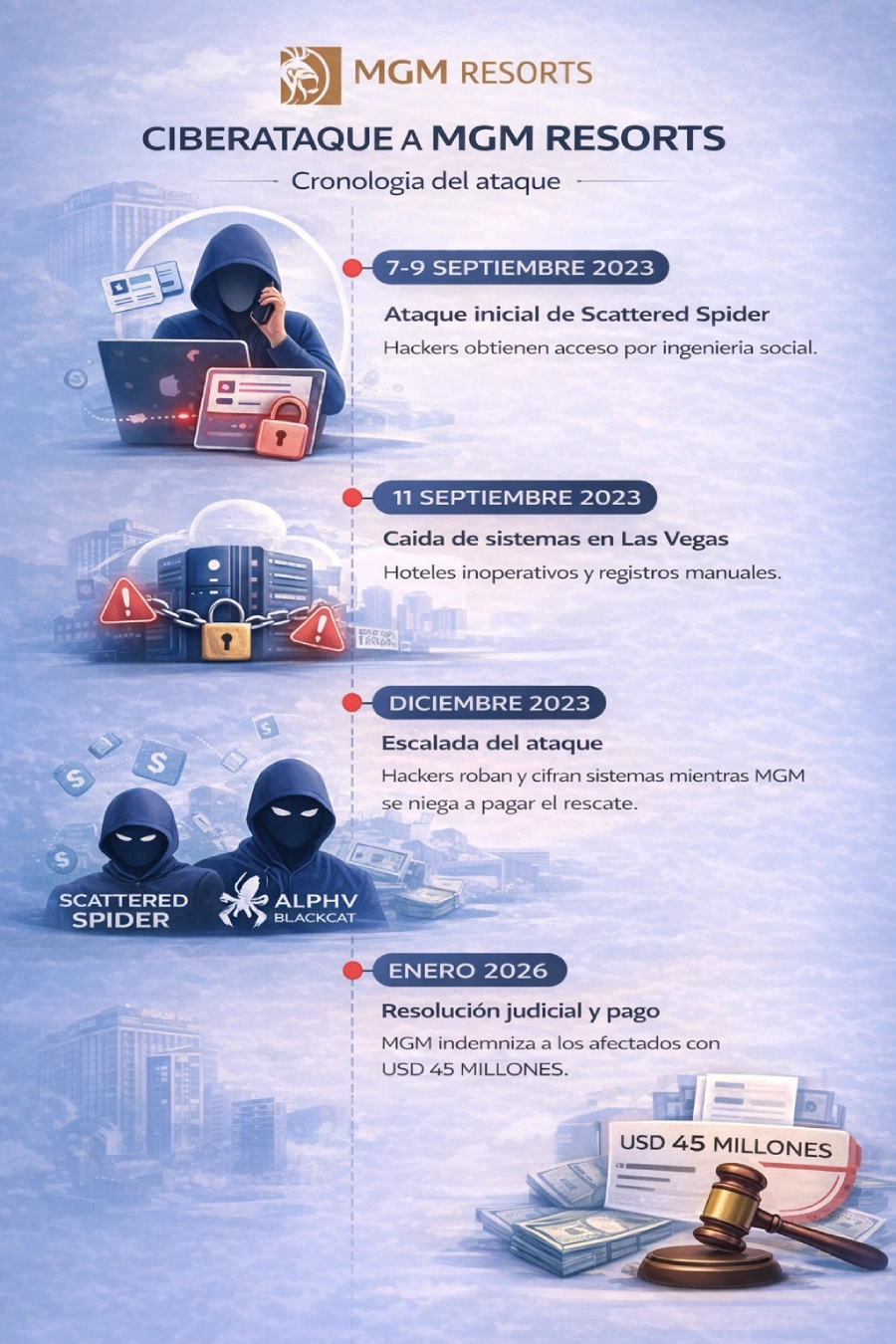
Timeline of the cyberattack on MGM Resorts (2023).
From that initial access, the attack escalated rapidly and ultimately generated a direct impact on the company’s operations, demonstrating something that is repeated time and again in cybersecurity: when an attacker manages to get someone to “open the door,” the rest is usually only a matter of time.
These types of attacks are especially dangerous because they are not based on “breaking” a system, but on taking advantage of common situations in any organization: urgent requests, pressure to resolve incidents quickly, or requests that appear legitimate.
Within minutes, a compromised account can become a gateway to internal tools, emails, sensitive documentation, or even to impersonating employees in order to attack other colleagues.
The key is to understand that, in many cases, the risk does not begin with technology but with the process: how identities are validated, how access recoveries are handled, and how we respond to unexpected requests. That is why social engineering remains so effective: it plays on urgency, trust, and context, leading the organization to lower its guard precisely when it should not.
In this context, many organizations are turning to advanced Red Team exercises to simulate real-world attacks and evaluate the detection and response capabilities of their security teams against increasingly sophisticated threats.
Not all incidents begin with a technical failure. Sometimes they begin with a phone call. That is why strengthening verification processes and habits is one of the most effective measures to protect a company.
⚠️ REMEMBER: Within minutes, a compromised account can become a gateway.